Underground Woollen Hat Production Goes Global
Written by Hala Saleh
Hala Saleh is a mixed Egyptian/English former journalist at BBC Arabic and World Service. Obsessions: cooking and Egyptian pop music
Grey landscapes of Gaza – it’s what you see; but also what you imagine or remember; what you don’t want to think about.
Photos of woollen hats, booties and blankets in so many colours were being posted onto the group chat at GINA. This is how I first saw it, repeated bursts of colour on a WhatsApp chat. GINA ended up receiving around 100,000 knitted and crocheted pieces of clothing for babies in Gaza, from all around the UK and abroad.
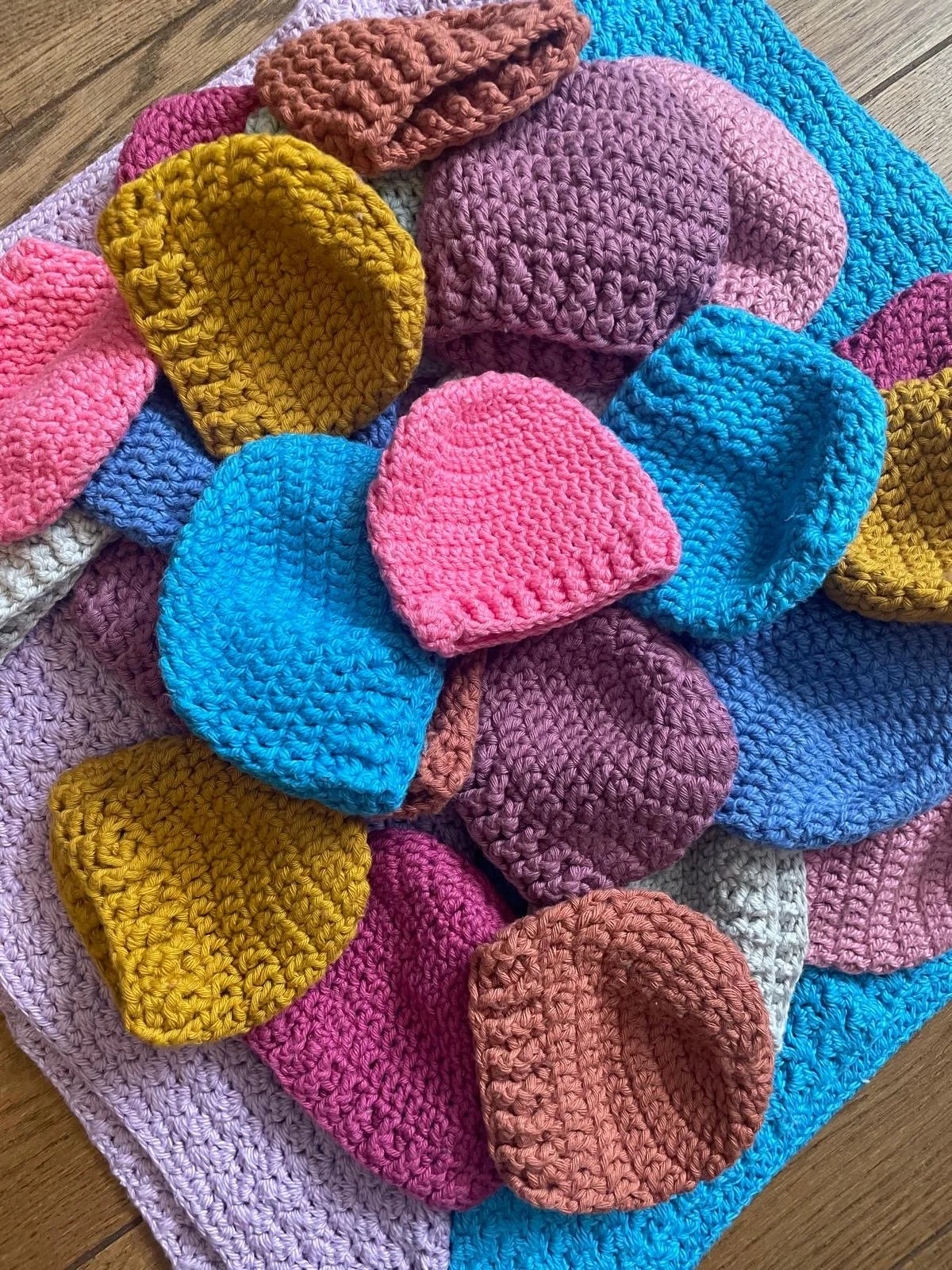
Like walking out into the sunlight after a film, in my dazed sense of cognitive dissonance - it seemed to be some kind of revolution or mass revulsion against the grey devastation we were used to? Was this the voice of a silent majority? Did those that made these clothes ever imagine they would do this? Do makers form a large percentage of the UK or even global population? I remembered the Egyptian women who were our neighbours when I was a child in West Africa. They were all swapping Burda patterns. Never heard of Burda patterns? Maybe because their story was never told. They were a silent or silenced majority that saved money and made their own clothes. Win win.
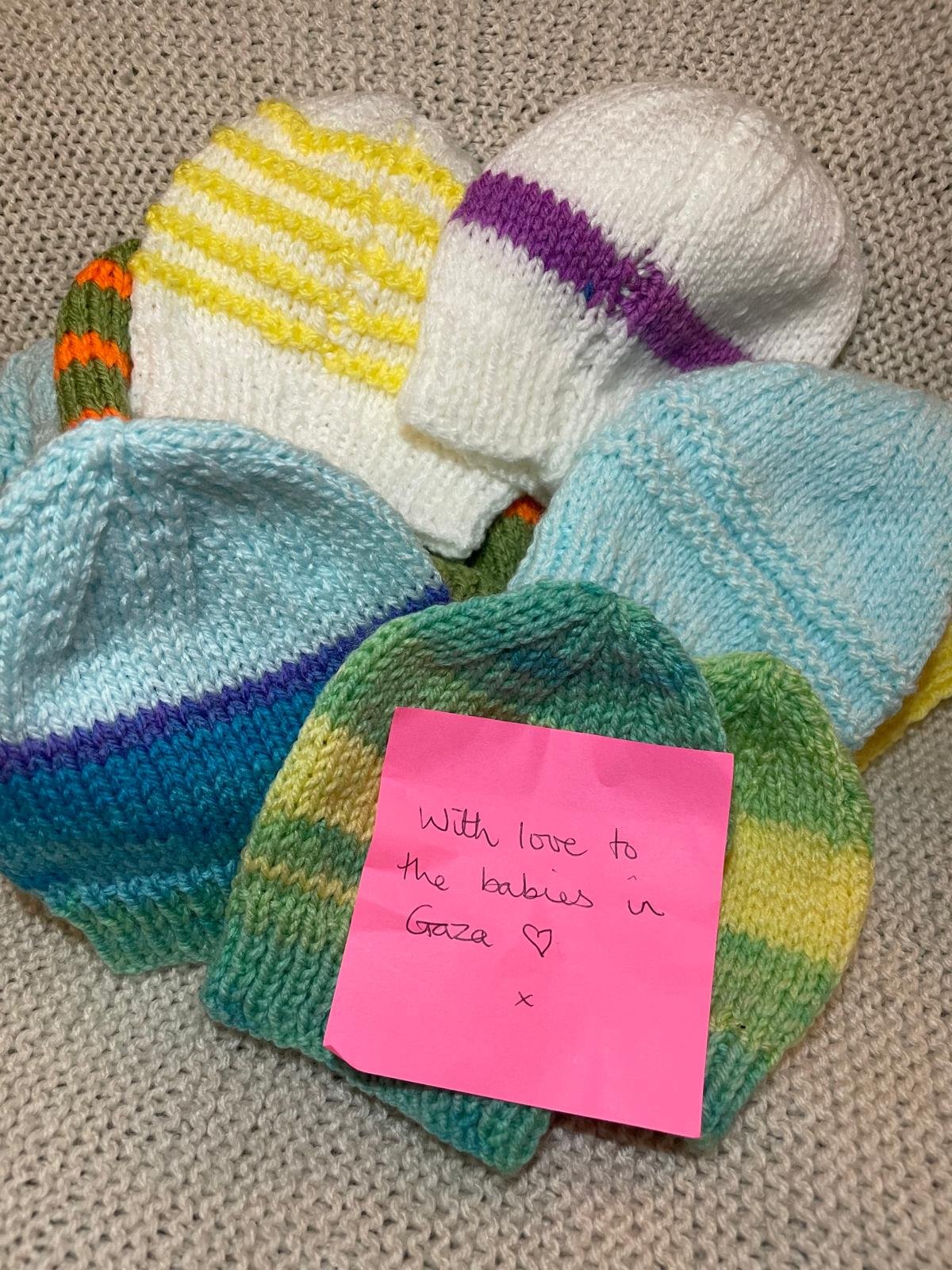
With love to the babies in Gaza x
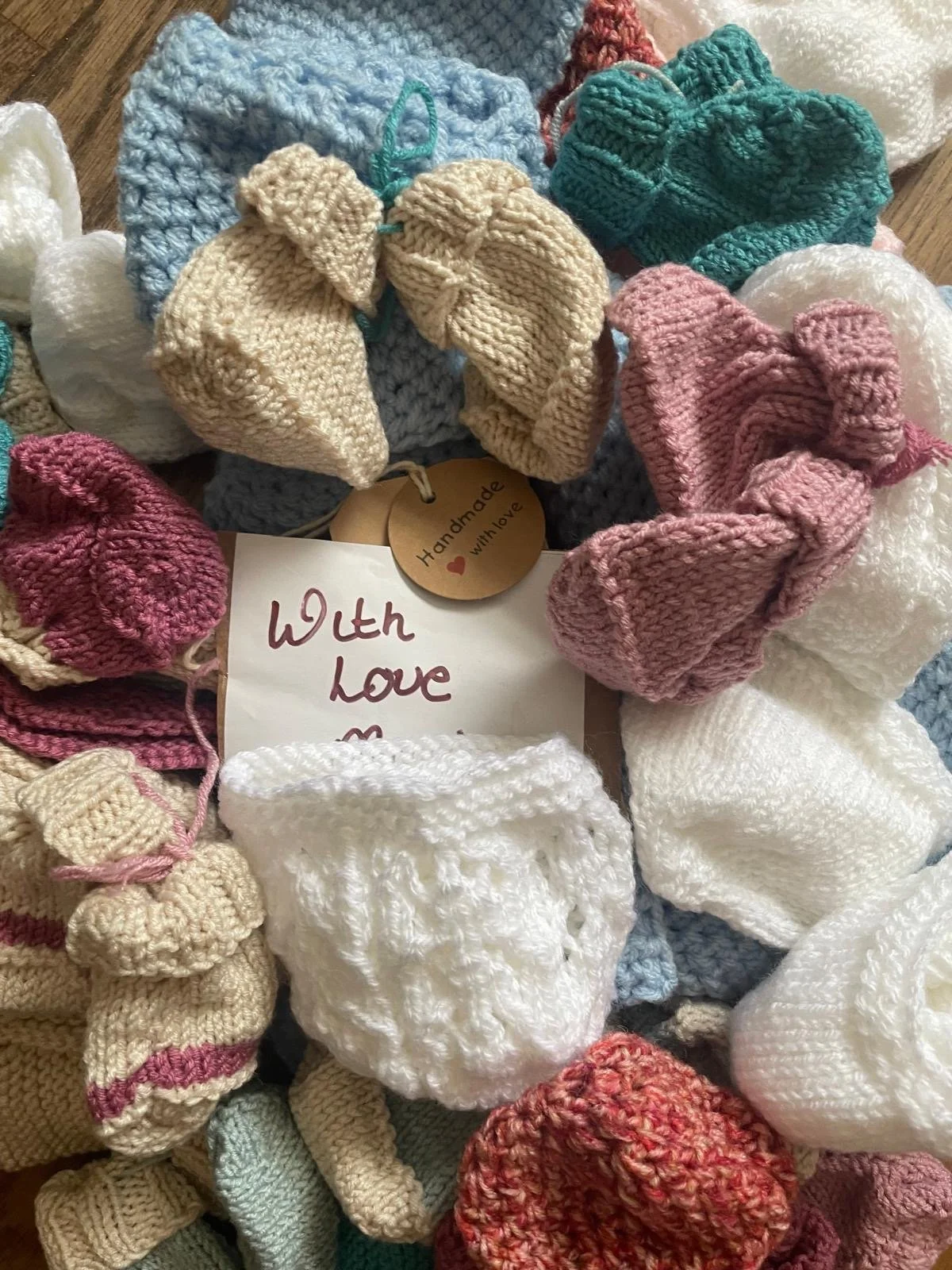
Who are they? And where are they?
These tiny woollen creations were sent off to Gaza, and from then on had another story arc with their new owners. But I wanted to know more about this phenomenon. It did feel to me like a phenomenon, of women suddenly coming together like a mass movement of some kind.
Did it spread by word of mouth? Was it a type of activism, craftivism? I am thinking maybe left-wing, Che Guevaraesque? But maybe no, too militant. What were the knitters’ and crocheters’ daily lives like? Did they meet up over cups of coffee, needles clacking, like a cosy sleeper cell? Or did they crochet well into the night before their fingers went stiff? Firing off a message to a secret server before bed? GINA started in Scotland, so maybe most of them live in Scotland? Even better, a misty island in Scotland.
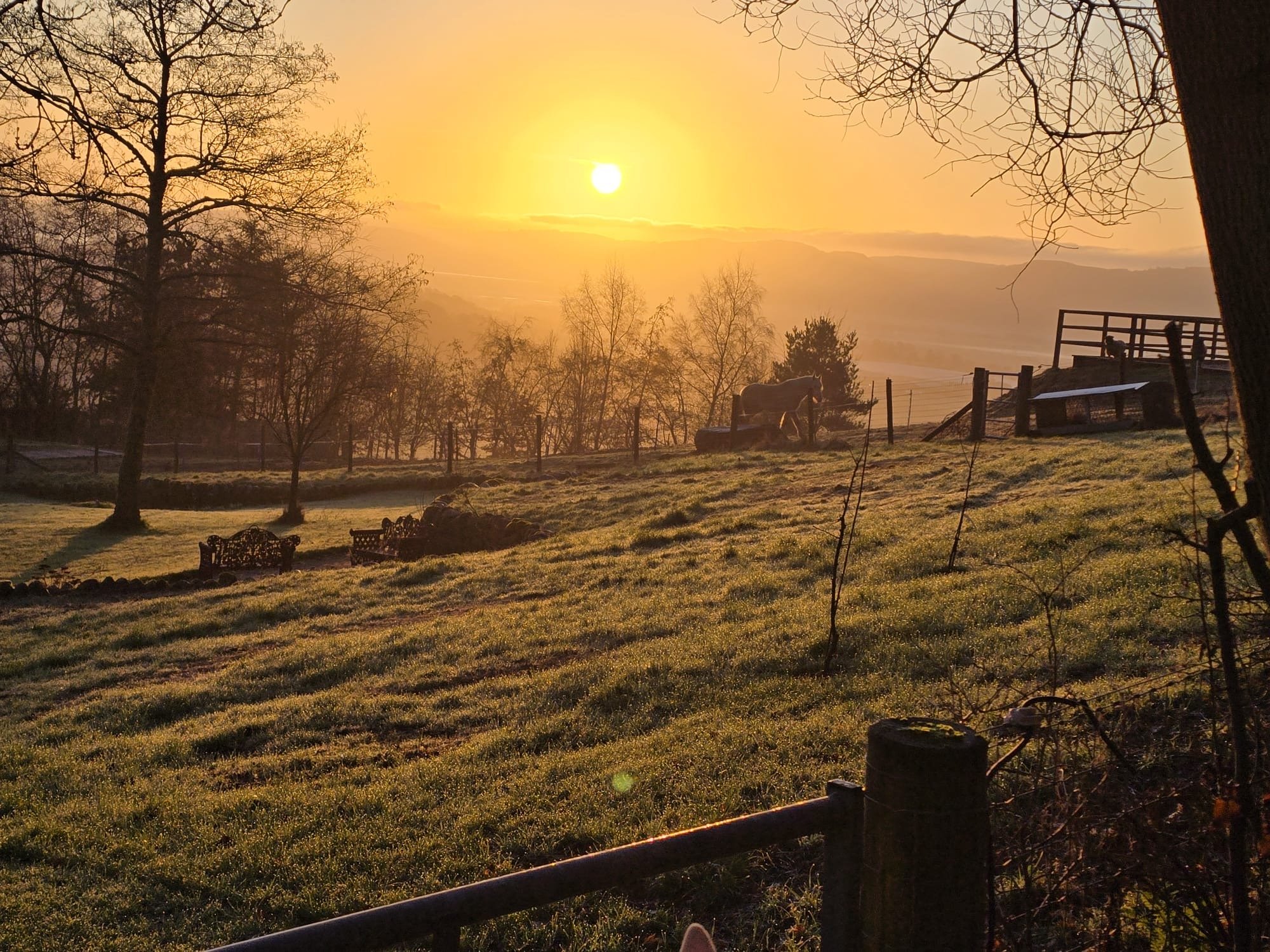
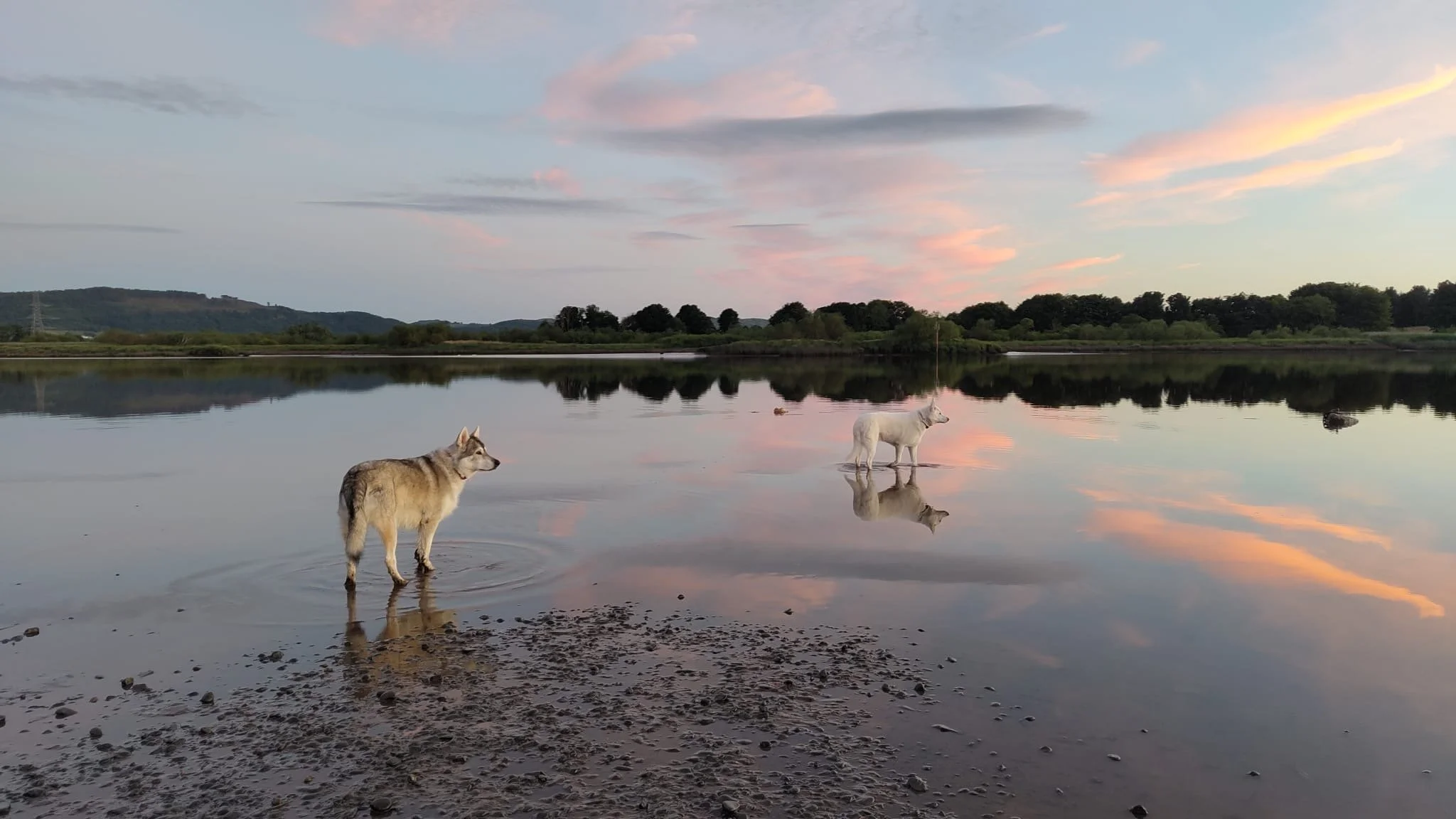
I later found out that one of the Scottish knitters lived not far from where I used to live in Scotland. She turned out to be the only one out of the seven women I talked to that came closest to my misty Scottish village idea. Here are some photos of the scenery near where she lives – just so you can feel some empathy for the tricks my mind was playing. Of course I had made up a story. But the real story is much more interesting.
Lelah and a difficult retirement
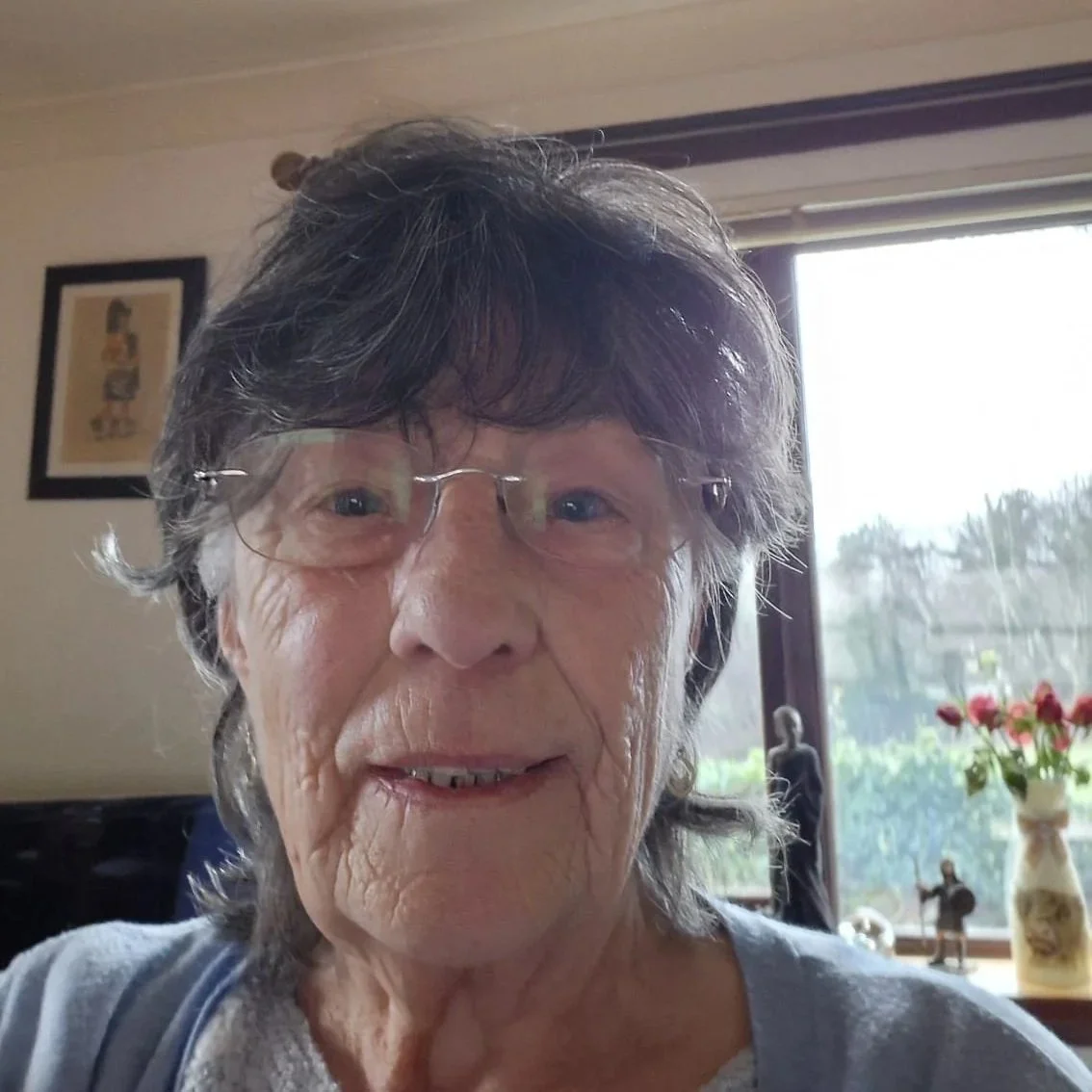
Lelah lives in Perthshire with her two dogs. She also has something in common with me, that she used to live in Africa, in her case it was South Africa. She describes herself as very shy. She would never have heard about the knitting and crocheting drive or about GINA, were it not for someone she knows at the Women’s Rural Association.
“Retirement is very difficult. So I keep occupied by going to the local centre and being involved in the knitting group, social aerobics class, and a craft class, which is card-making and scrapbooking,” she explained.
This was living up to my first idea of women meeting locally. By the time she had heard of the campaign, Lelah had already built up quite a lot of experience.
“We’ve done quite a lot of hats for preemie babies at Ninewells Hospital in Dundee, so it was easy enough to pick up some wool and knit a few hats, which I did.”
Her difficulty with retirement stayed with me. I am also finding it hard. That’s why I’m writing this blog post.
Viral on Instagram
It’s important to keep an open mind, which is hard when you love jumping to conclusions, like me. It wasn’t a by-word-of-mouth revolution; it mainly happened on social media. Specifically this Instagram post:
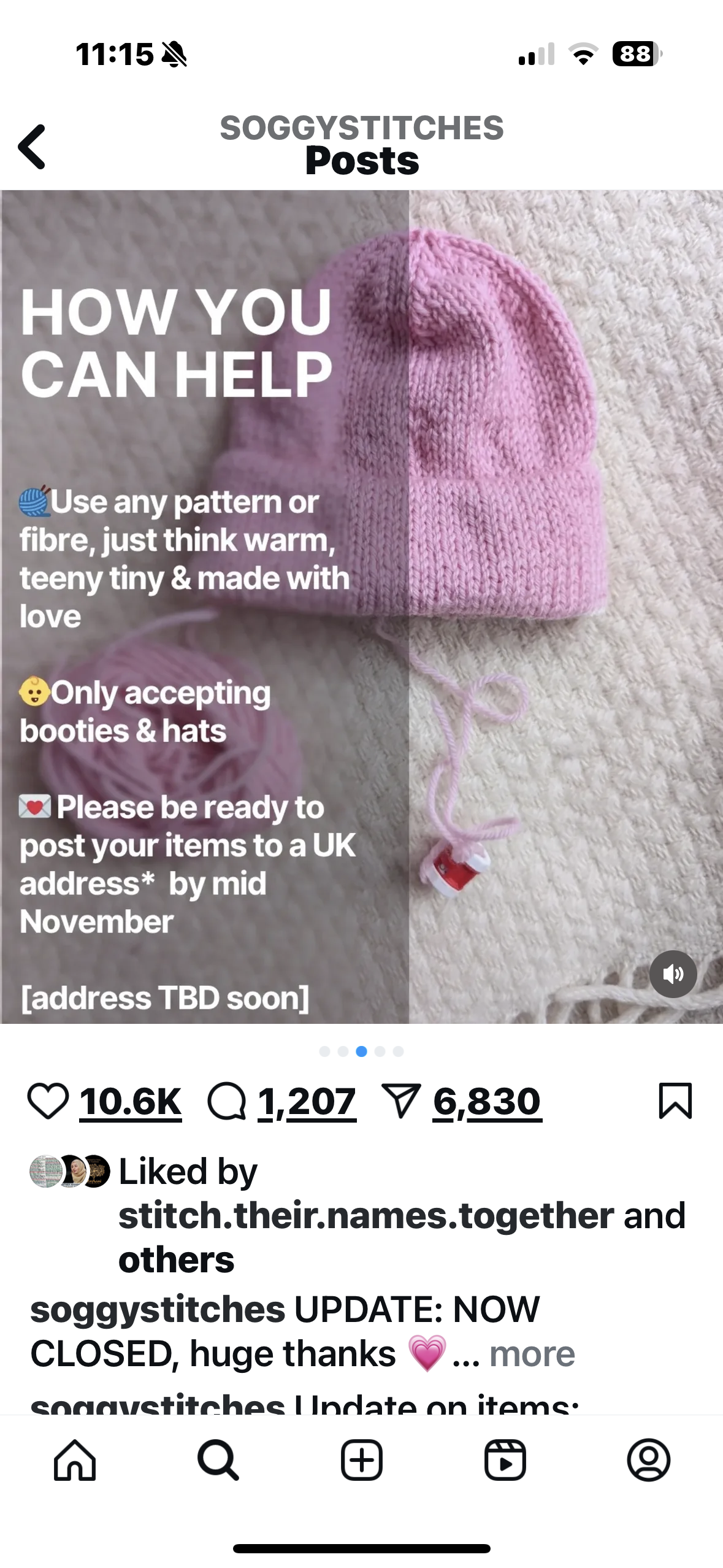
I reached out to @soggystitches who told me how it started. And it also had its own kind of
romance, not like I imagined, but close, or maybe better?
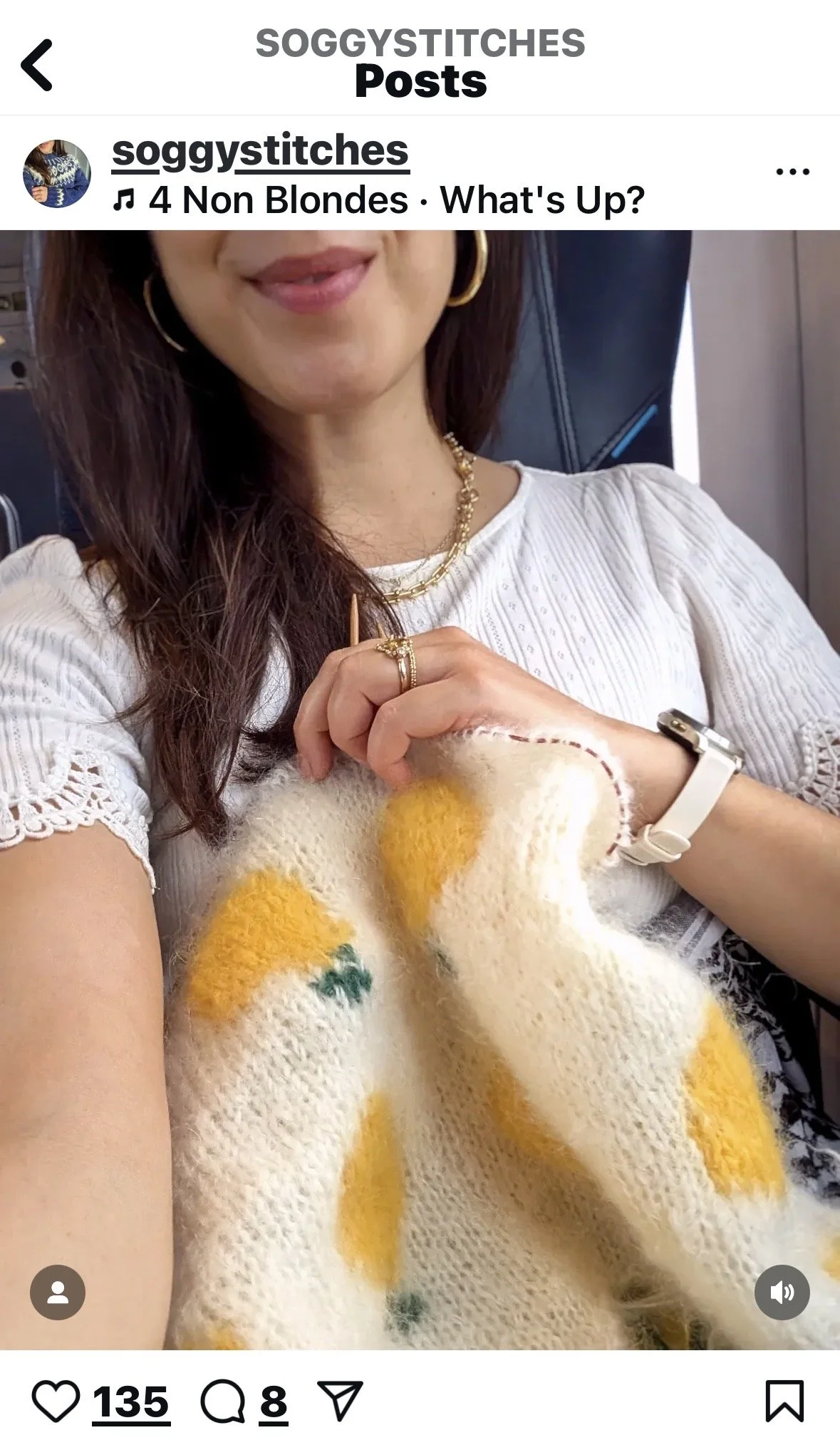
@soggystitches is a business owner from the south of England who was taught knitting by her grandmother many years ago, but she took it up again after a break up.
@soggystitches has become more in touch with her Muslim heritage.
She shared: “I was absolutely thrilled last summer to discover that there are people in my quite small town locally, who care about Palestine. Then through these contacts of mine – likeminded local people who care - I found out about GINA’s appeal, and I said, well I have a knitting Instagram, I can post about it! I mean, it was right up my street! My two hobbies combined!”
So I was partly right – the movement did start with local people that @soggystitches actually knew. Viva La Revolucion. But then it left the street behind completely.
“I thought I’d get maybe 10 more people to join in – but I spent some time on the post,and wow – it just blew up … definitely ‘went viral’ when you consider how few people my posts would normally reach vs the reach on this one.”
All of the makers I spoke to, apart from Lelah, had been inspired to take GINA’s knitting/crocheting challenge through this @soggystitches post on Instagram.
Nada, a doctor and a mother with Yemeni heritage, had seen the Instagram post. She told me how she had thought of her own trauma when she read it. “I’m the Mum of a previously very premature baby girl. She was born at 30 weeks, and I would say that having a premature baby girl was one of the most traumatic experiences of my life. And I had her hats, her knitted hats from when she was in the neo- natal intensive care here. So I used the patterns for her hats to make the hats for these babies.”
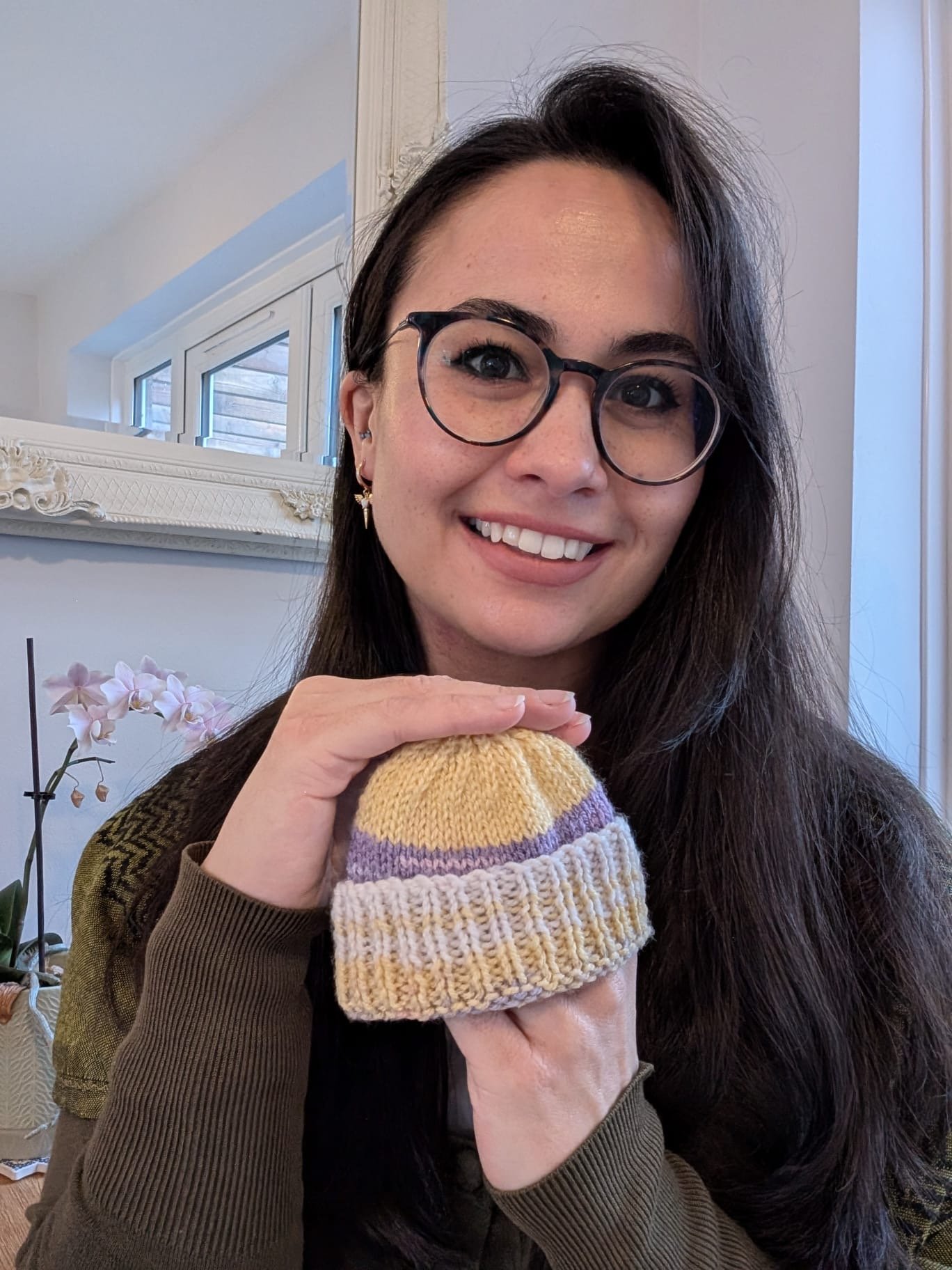
“I slipped these little notes into the hats”
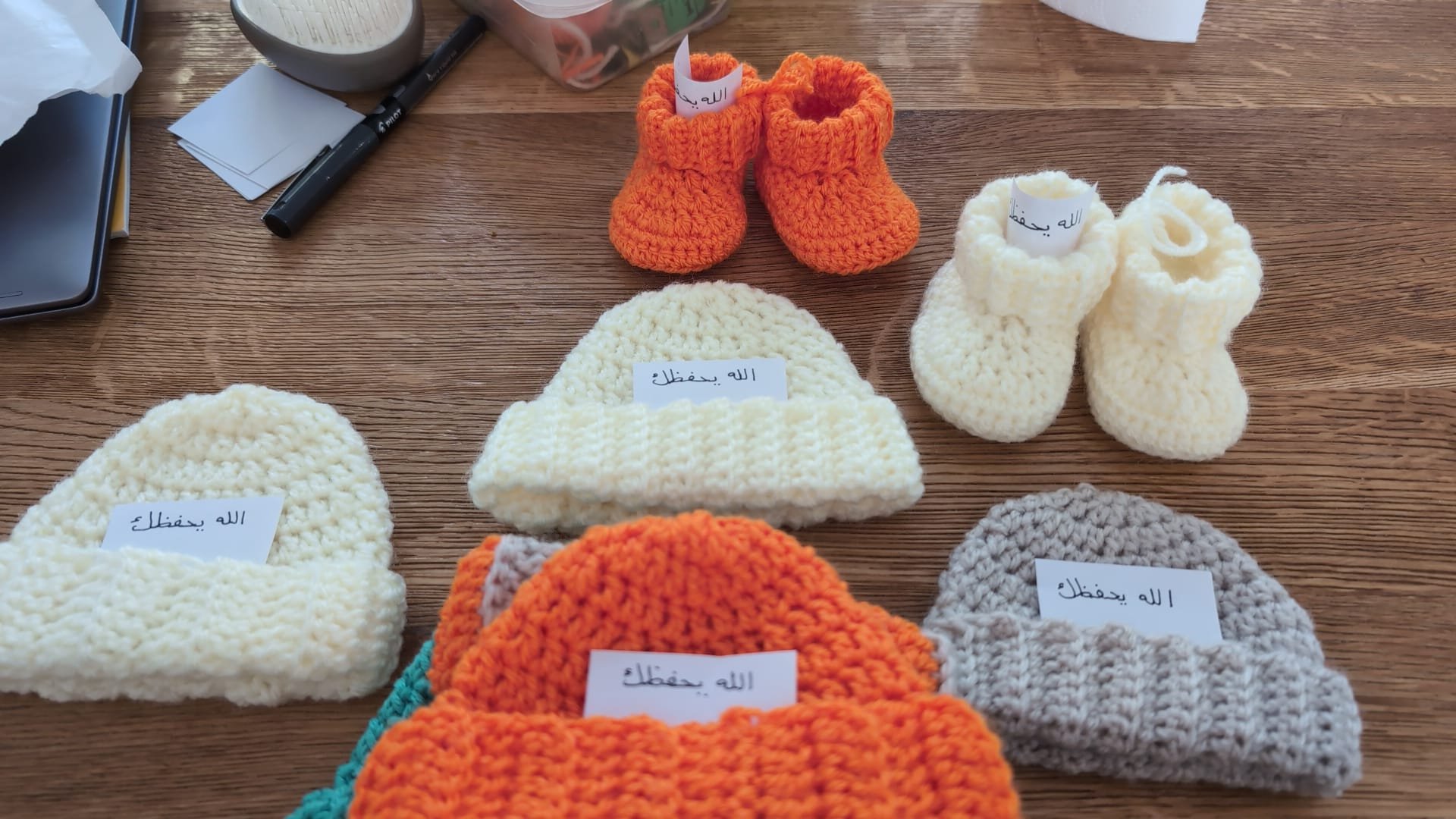
Nada wanted to send a message to the mothers of the babies, as many of the makers did actually do. Because she has Yemeni heritage, she decided to go out on a limb, and write in Arabic. She said: “My Arabic is really poor, but I tried to write in my very very bad Arabic handwriting:
‘May Allah preserve you, May Allah protect you.’
I slipped these little notes into the hats. It was just like my wish and my promise and my prayers for these children. When I then saw on the GINA website that there was a picture of one of my hats with the message and that the mother had said ‘thank you’ to the knitter. I wasn’t expecting to hear anything back. I saw this tiny little adorable baby wearing my hat that I had knitted, I was quite transfixed, and I just sobbed. Absolutely sobbed on the spot.”
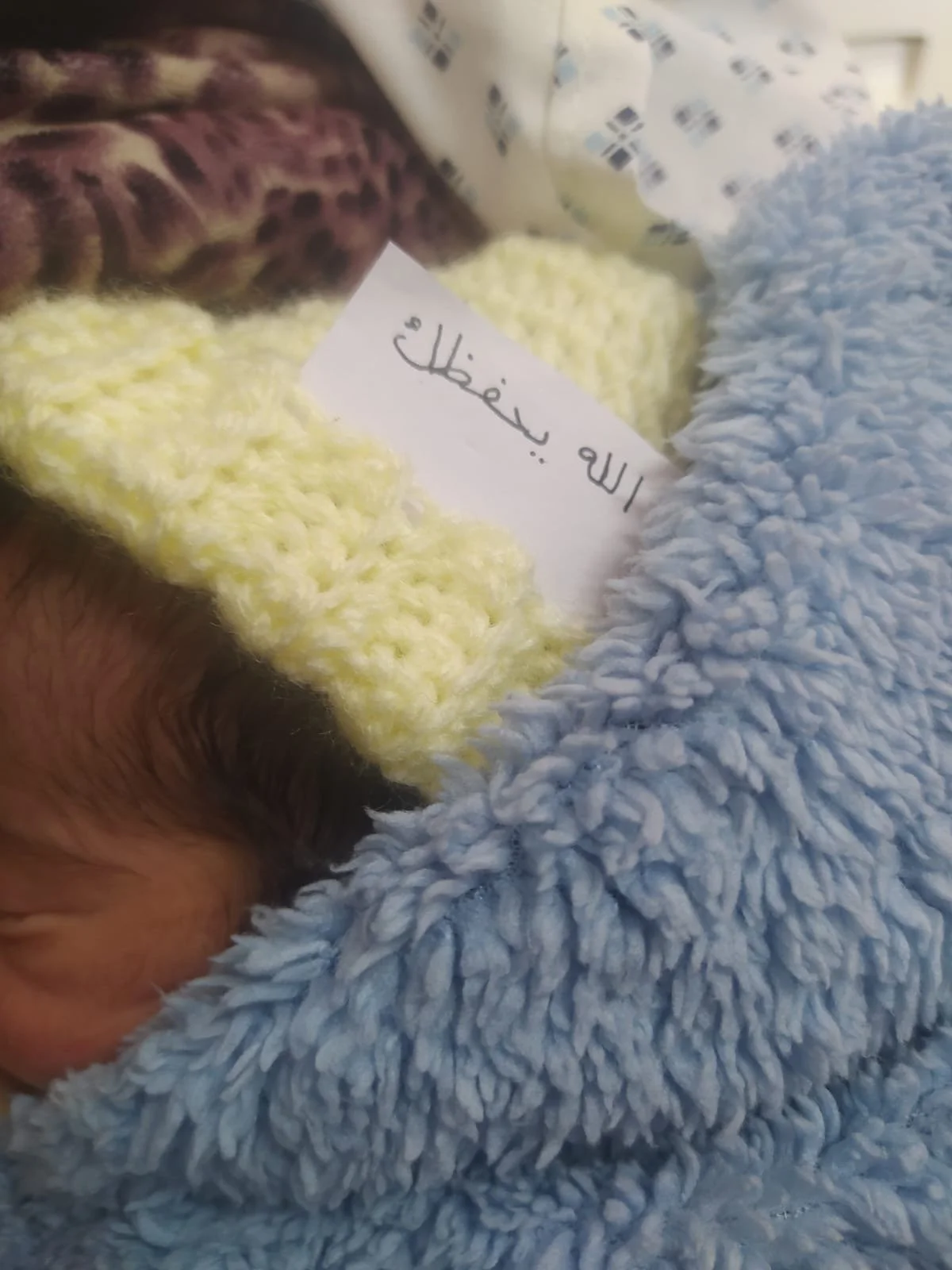
The baby in Gaza who actually got Nada’s knitted hat and note.
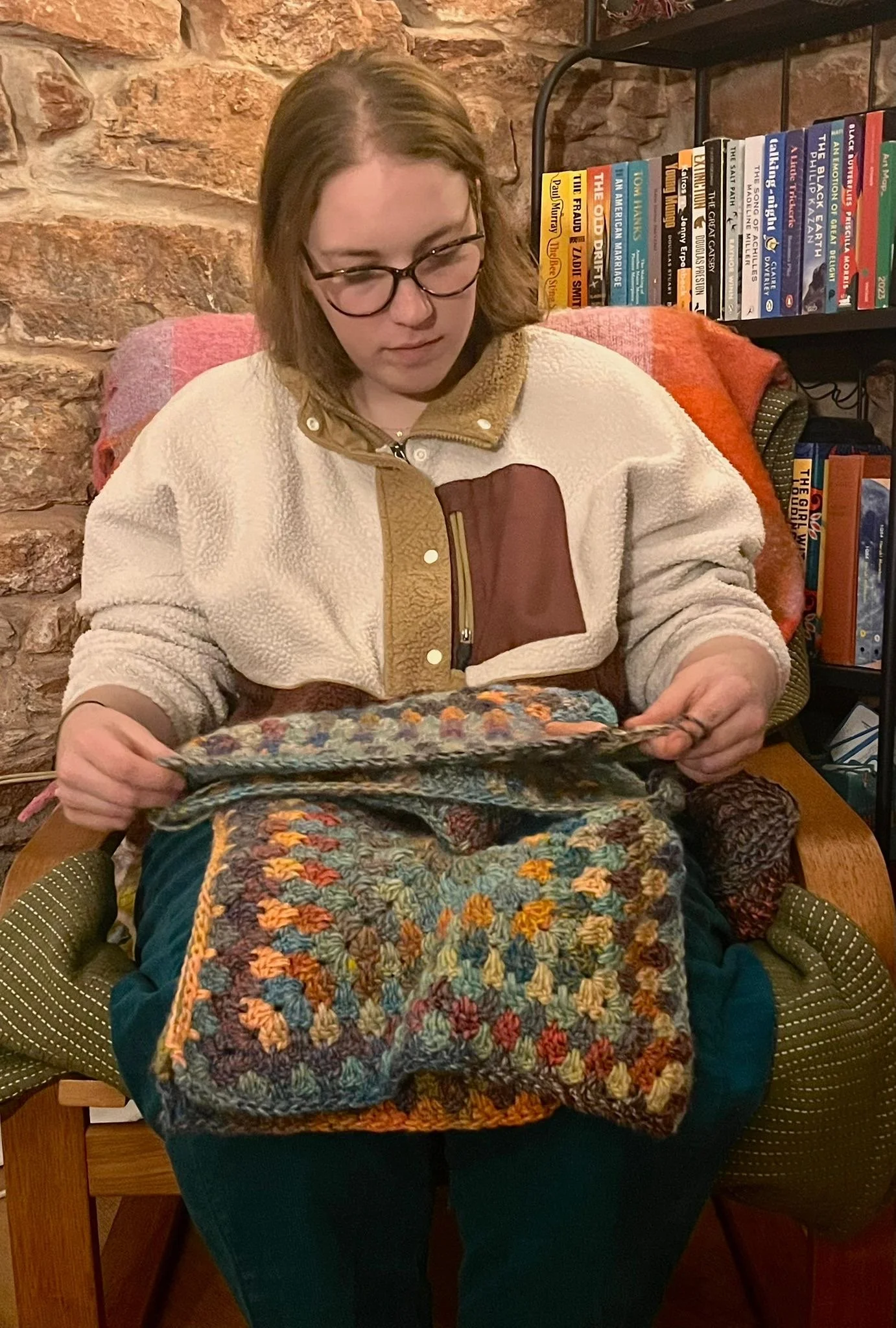
“I’ve got a hook, and I’ve got some yarn”
Lou works in education and her activism is expressed in her crochet hook. What struck me about many of the women I talked to is a sense of empowerment and pride in their skills. Can do – will do. Lou describes herself as an avid reader, and a huge lover of art.
“I’ve not really been able to attend any of the protests in London or elsewhere because of a range of things,” said Lou.
“I’ve been getting increasingly upset and angry even at a lot of the atrocities that have been occurring towards innocent individuals that deserve a lot better, and historically have faced a lot of persecution, so I wanted to do something that could be very constructive, and really supportive, and so I decided that I could do this. I started crocheting last year, maybe the year before, so I’ve got the skill. My mum’s also a crocheter, so I shared this with her and she immediately got involved as well.”
Lou was shocked at how small the hats were.
“When I first saw the measurements and started making them, they just looked too tiny.
I said to my mum ‘I’ve checked a few measurements, and they are saying these are the ones for premature babies but they look too small.
I think that was the hardest bit, realising just how small and vulnerable a lot of these children are.”
I noticed that many of the women I spoke to, like Lou, also involved their mothers or friends. Or their friends involved them.
Louise, Valerie and Goat’s cheese
Louise, who left London to live on the south coast, stayed in touch with a London friend called Valerie, whose husband is Palestinian with family in Gaza. Valerie reposted the #tinyknitsforgaza post by @soggystitches
But unlike the other makers I spoke to, Louise came to the knitting after being involved in another project that she had found much more overwhelming and intense, as well as being incredibly moving. Louise said:
“So I met Valerie. I was working at a farmer’s market selling goat’s cheese in Chapel Market in Islington and she passed by – her being French and liking goat’s cheese. But she also knits. So we were chatting about Palestine and knitting really, and occasionally cheese. She asked if I would like to be involved in this, and I did.
Essentially you sign up and then you have to choose a name that you would like to embroider with a design, so you have a twenty centimetre square, which sounded simple and I thought ‘I can do that’
But then you were sent lists of hundreds and hundreds, probably thousands, of children’s names, done by year and age.
Even now, to think about it, it was one of the most moving things and was overwhelming. I chose a girl’s name who was 9, the age where you’d be gaining independence, running, skipping, playing games, having friends, and you know, starting life. I chose her, and her name was Lana. And then I embroidered some swallows with sunshine on it.
Louise told me that after this embroidery project, called Each Child A Light, the knitting project was just a straightforward pleasure.
She shared: “Although the embroidery thing was incredibly meaningful for me and many hundreds of others, the awfulness dawned on me. So to knit little hats was just a pleasure to be honest.”
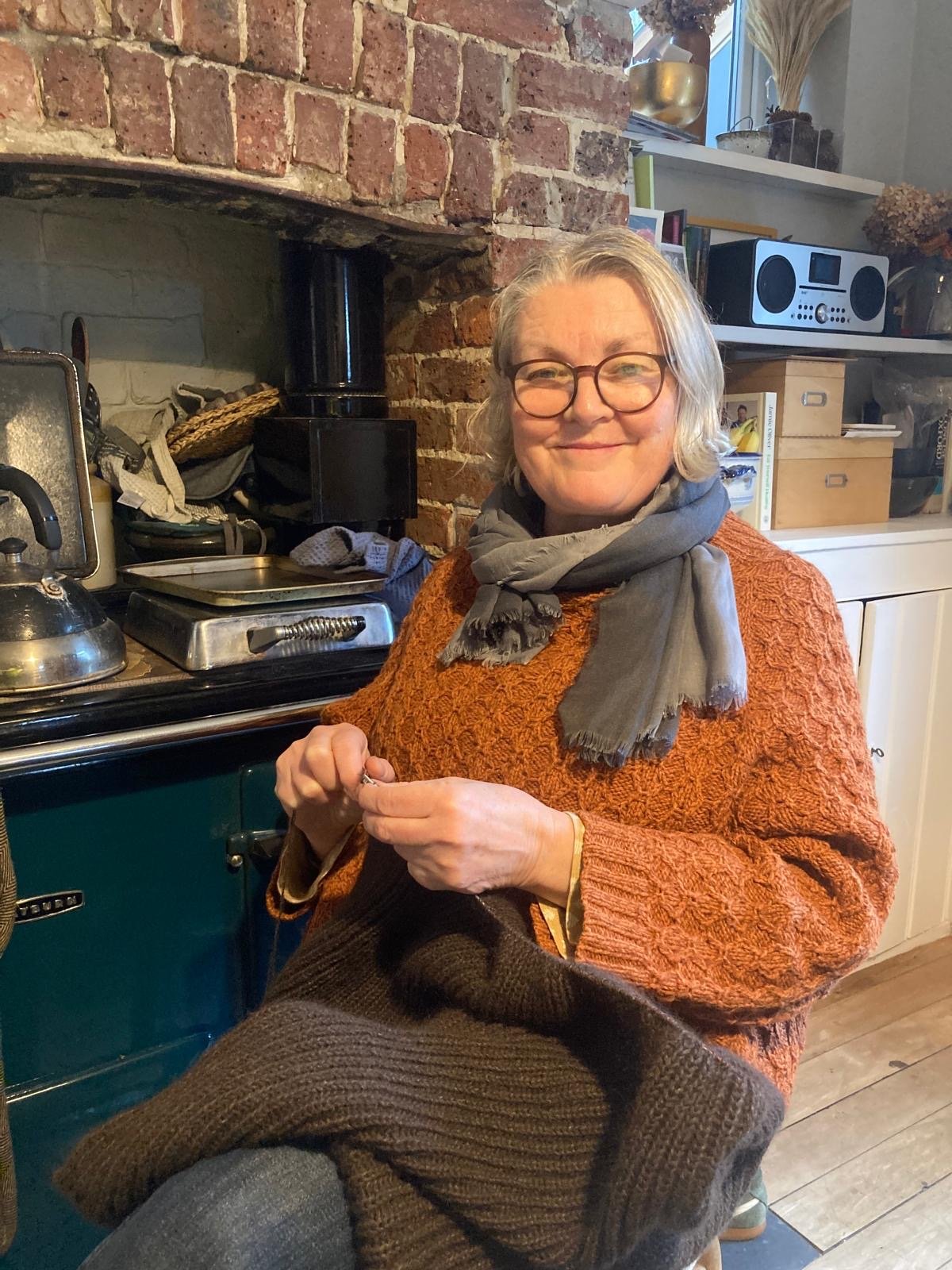
Louise is a retired florist who has a maker’s hands and heart
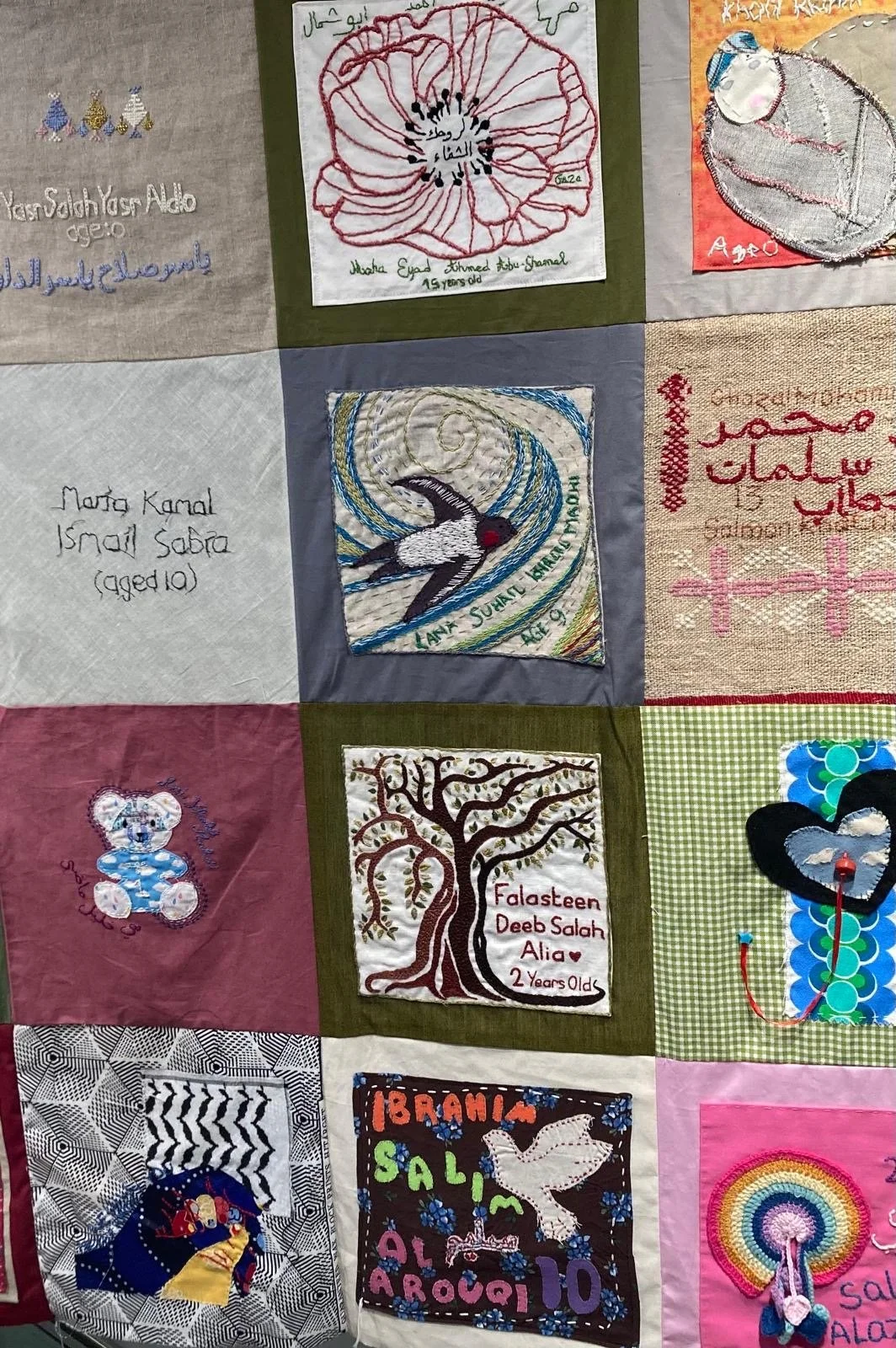
Louise’s embroidery
A daughter’s baby blanket and a grandmother’s yarn
Sam says she feels deeply about what’s going on in the world, especially injustice. The knitting project turned out to have so many links and echoes in her own family. Sam works in marketing and communications and knitted furiously to make the deadline.
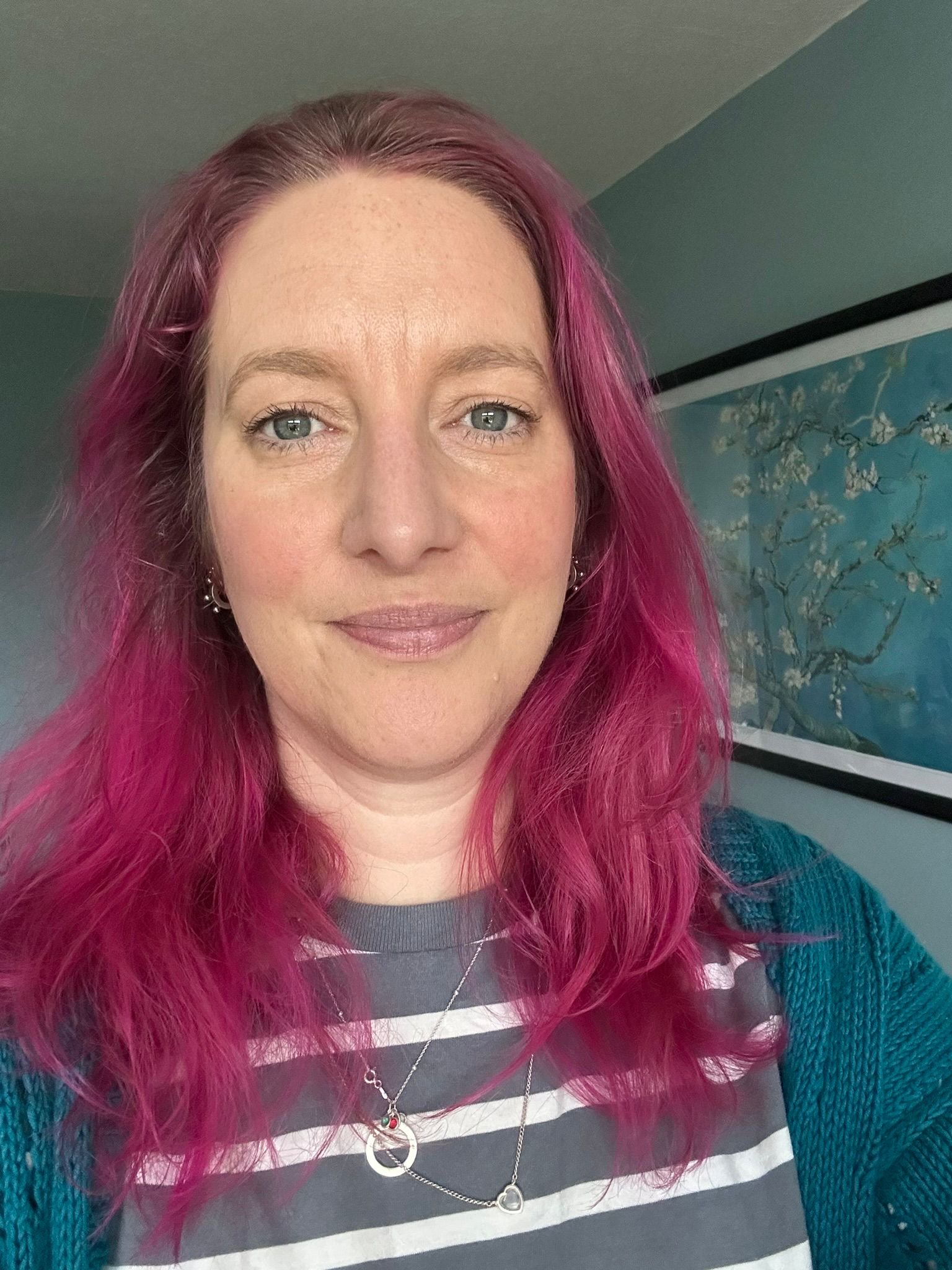
“I knitted a blanket but also sent one that had been knitted by a friend for my daughter when she was born. She’s now 11. My daughter was also happy to send it; I asked her. It felt like a really beautiful thing that my friend had put in lots of time and effort into making for my daughter.”
“Sending it was better than sitting and waiting for my daughter to possibly have kids at some point in twenty years time,” she laughed.
“I tagged my friend who knitted it in the post about it, and she was really pleased to hear that her blanket was being sent to Gaza as well”.
Sam was stressed, as she came to know about the campaign just a couple of weeks before it ended. She ran out of wool and had no time to get more, so she used an old ball of yarn that held special memories.
“The purple that I used was wool from a scarf that I knitted for my Nan, who died a few years ago, and so that felt like a really lovely thing to be able to use. I was intending to use it for something for myself, but I hadn’t done as yet, and I thought it was a really lovely thing, because it’s very special wool to me.”
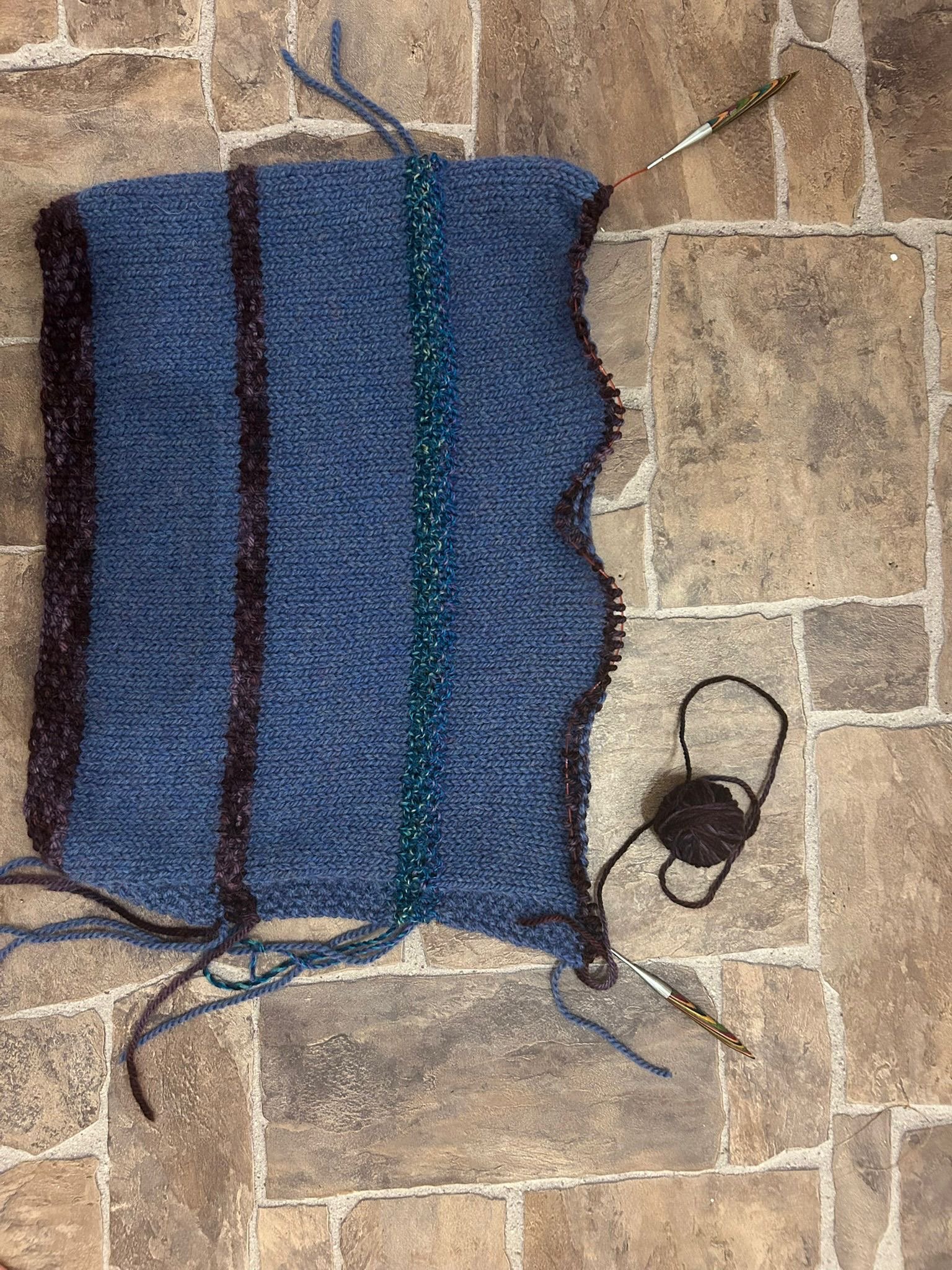
Jordan-Leigh is a compliance manager and crochets as a side hustle. Jordan-Leigh told me she goes by JL. She works in the mortgage industry. For many of the women I spoke to, sometimes a hidden trauma is what led them to crochet or knit. This is what happened in JL’s case as well.
She said: “I started doing it to sort of keep my mind off things. I had a health scare in 2024 and I needed something to keep me busy, so I picked my hooks up and I haven’t really stopped since.
“In terms of the Knits and Crochets for Gaza, I had seen an Instagram story by @soggystitches. As soon as I saw it, I knew it was something I wanted to be a part of.”
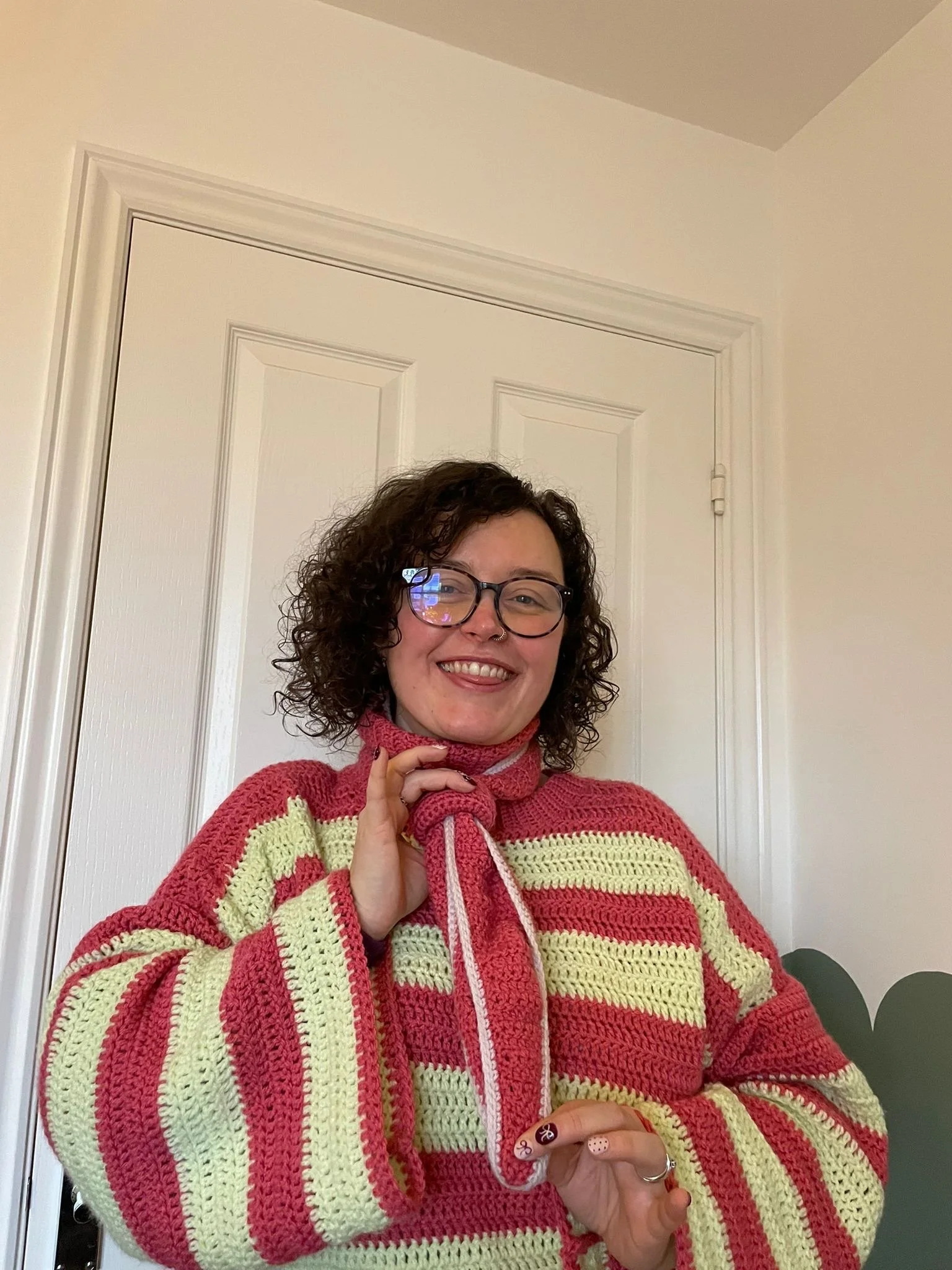
“To keep my mind off things”
One of JL’s chief motivations to help mothers and babies in Gaza, is her passion to know the truth and the feeling that the media is not reflecting reality, or only a part of it. She tries to get her news from sources on the ground who are sharing the voices of those suffering the most.
“It was one of those where it really pulled at the heartstrings, and there were moments when I would get teary putting things together.
“I do try to get a lot of my news from someone on the ground, so I do follow quite a few journalists that are in Gaza.
“It was certainly upsetting - and it is still upsetting - to hear the stories in their media that are not being shown on mainstream media.”
I wanted to end on JL, as I think she most closely represents the idea of a kind of underground movement that actively seeks to find out the ‘truth’ and uses their critical judgement.
I think all the women knitters and crocheters do that as well, but JL articulated it so passionately that it reminded me of the undercover women’s group I had so vividly imagined at first. Also she’s Scottish. Ha! Weren’t expecting that were you? I wasn’t really going to let go of my fantasy was I?